


RPA PSI Seminars
RPA PSI seminars focus on trying to understand mathematical, modelling, and empirical aspects of polarisation, segregation and inequality, and their interrelationships.
>> RPA PSI Seminar: Alla Loseva (University of Groningen)
Mechanisms of rising affective polarization in empirically-based school networks | 9:30 am, 11th of June 2026
Affective polarization – animosity between social groups – has been studied extensively in political contexts, but it also manifests in schools as interethnic prejudice, discrimination, alienation, and violence. Although individual-level processes of prejudice development are well understood, and empirical evidence confirms that interethnic attitudes spread through student networks, whether these micro-level processes produce macro-level affective polarization remains unclear.
Political polarization research points to two main mechanisms: repulsive influence between holders of opposing opinions, and increasing segregation by opinion that traps people in like-minded interaction bubbles. Neither translates straightforwardly to interethnic settings. Moreover, existing models implement either unconstrained communication spaces or stylized networks, whereas in real school networks, polarization dynamics may be suppressed or amplified in ways stylized networks cannot capture. I address these limitations using agent-based models initialized on empirical friendship networks and interethnic attitude distributions from ethnically diverse German secondary schools. I adapt existing influence models to the interethnic setting by incorporating contact effects in intergroup interactions, and jointly manipulate two factors: the type of social influence model (assimilative, bounded confidence, and reinforcing), and the degree of ethnic segregation in the network. In the talk, I will share how the emergence of affective interethnic polarization depends on initial attitude distributions, the influence function, and network structure, giving a theoretically grounded account of when school contexts are most at risk for interethnic affective polarization.

>> RPA PSI Seminar: Willem Boterman (University of Amsterdam)
The politics of meat | 9:30 am, 4th of June 2026
In this talk, I will discuss how the transition away from meat and dairy becomes political across different spatial scales. I present recent work on the polarization of meat consumption and connect this to a political geographical analysis of the politics of the protein transition.

>> RPA PSI Seminar: Michel Vols (University of Groningen)
Housing, Court Judgments and Data Science Approaches | 9:30 am, 30th of April 2026
In his presentation, Prof. M. Vols will explore how data science can be used to analyse court judgments and other legal data in the context of housing and vulnerable persons. He will discuss several data science techniques and tools his team used in the ERC-funded EVICT project (including topic modelling, SVMs, network analysis, and LLMs). Furthermore, Vols will focus on a recent project about the role of children’s rights in a large set of eviction case law. Recent research indicates that nearly 20 percent of homeless individuals in the Netherlands are under the age of 18. This alarming statistic contrasts sharply with the country’s ratification of the Convention on the Rights of the Child, which mandates that the Dutch government take all necessary measures to prevent child homelessness. This obligation extends to the judiciary, which plays a vital role in preventing evictions, one of the primary causes of homelessness. In eviction cases, the best interests of the child should be a primary consideration for the judge. In 2025, the Dutch Supreme Court clarified the extent of this obligation. The project seeks to examine how courts address the obligation to consider the interests of children in cases where there is a risk of homelessness. It utilises a data science approach to analyse a unique quantitative database comprising over 10,000 Dutch court cases related to eviction. Vols investigates the role minors play in these court cases, whether and how their interests are assessed by the courts, whether the presence of a minor influences the court’s decision, and how the risk of homelessness affects this decision. The findings reveal that the protection against homelessness for minors varies significantly across different courts. Additionally, the paper will offer concrete recommendations for policies that courts could implement to enhance protection for minors at risk of homelessness.
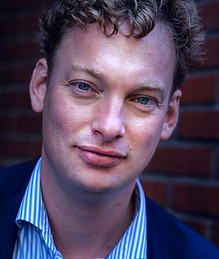
>> RPA PSI Seminar: Johan Bollen (Complexity Science Hub)
From Cognitive Distortions to Collective Polarization: Evidence from Online Text | 9:30 am, 23rd of April 2026
Millions of individuals leave detailed, longitudinal records of their cognitive, affective, and behavioral state in their online activities. Our research program traces the involvement of cognitive distortions, overly dichotomous and exaggerated thought patterns associated with internalizing disorders, in depression, anxiety, and possibly societal polarization through large-scale online text data. We find that online text which expresses cognitive distortions may lead to higher rates of online engagement such as sharing and liking, depending on the individual’s mental health status. Additionally, expressing higher rates of cognitive distortions is associated with increased rates of political polarization, suggesting an interesting connection between online language, cognitive biases, and polarization. Finally, we show that simple one-shot interventions may reduce this effect, highlighting interesting pathways to improve both individual and collective mental health at scale.

>> RPA PSI Seminar: Rowan Arundel (University of Amsterdam)
Wealthscapes: Unpacking Growing Spatial and Societal Divides in Housing Wealth? | 9:30 am, 16th of April 2026
Residential real estate represents by far the largest store of wealth globally and is fundamental in structuring societal inequalities. Housing markets have transformed through ongoing integration with global capital, financialization and household wealth strategies. Intensified flows of capital into property, however, appear increasingly uneven both across space and populations. Presenting his research in several European contexts, Rowan Arundel unpacks how housing wealth has become increasingly concentrated spatially – across regions, cities, or neighbourhoods – and how this drives growing wealth inequalities. He further introduces his upcoming research tackling a big-picture empirical assessment of the differing role of housing in either amplifying or mitigating inequalities across countries.

>> RPA PSI Seminar: Luan Martins Torres de Moraes (Federal University of Pernambuco)
Turbulence in Financial Markets | 9:30 am, 9th of April 2026
Financial time series are quite difficult to predict; the price of a certain asset is often assumed to be a random walk of some sort. In fact, geometric Brownian motion is assumed to be the simplest toy model for price fluctuations. As markets evolved to have more complex structures, new phenomena emerged, which led to the development of new theories for price fluctuations. In the 1990s, physicists showed that fluctuations in currency market prices have a similar statistical structure to the fluctuations of velocity in a fully developed turbulent fluid flow. The latter assumes that fluctuations have heavy-tailed probability distributions and occur due to intermittency and a coupling between adjacent time scales, where energy flows from larger to smaller scales. Interestingly, economists have known a similar effect, but with volatility replacing energy flow. In this talk, I introduce a statistical framework to study turbulence in complex systems, encapsulating intermittency and multiscale features. It is then possible to infer the number of characteristic time scales from a turbulent system by analyzing its time series. After that, the statistical structure is generalized to a multivariate form using techniques from random matrix theory. It is possible to considerably improve the description of correlations between assets, and thus find the percentage of turbulent noise in multivariate time series.

>> RPA PSI Seminar: Fijnanda van Klingeren (VU, CBS)
The Role of Network Isolation on Language Proficiency of Children of Migrants | 9:30 am, 2nd of April 2026
Although the school performance of children of migrants in the Netherlands continues to improve, it still lags behind compared to that of children of Dutch origin, which contributes to inequality in socio-economic outcomes. To reduce this performance gap it is of great societal importance to gain insight into the factors influencing language proficiency of children of migrants. This paper investigates to what extent the share of people from children’s own origin group in the network – network isolation – influences their Dutch language proficiency and subsequent sorting in educational secondary school tracks. To measure network isolation of children we used a whole-population network from Statistics Netherlands containing family members, household members, neighbours, classmates and colleagues. The score on the language component of the final-year primary school exam is used as an indicator of Dutch language proficiency. Results show that higher levels of network isolation, i.e., a higher share of the own origin group in the network, are associated with lower Dutch language proficiency. Furthermore, higher levels of network isolation are related to lower teacher track recommendations for secondary school, and this relationship is fully mediated by language proficiency. These findings highlight the importance of considering the broader social context —beyond language exposure in the household — when promoting social mobility of children of migrants.

>> RPA PSI Seminar: Mikhail Sirenko (TU Deft)
On the Role of Human Behaviour in Computational Social Science | 9:30 am, 11th of December 2025
Complex systems are famous for producing unexpected patterns. We often explain these patterns by pointing to the underlying network, which describes how people, institutions, or places are connected, the size of the system, and how shocks spread through it. But growing evidence from computational social science shows that this is only half the story. The behaviour of individuals within the system: their choices, routines, fears, and adaptations – can fundamentally alter how the entire system responds to stress or new policies. In this talk, I will show what happens when we centre human behaviour in our models. I will walk through three research projects on heatwaves, floods, and urban planning, using them as concrete examples of how behavioural assumptions can amplify, dampen, or completely redirect system-wide outcomes. Together, we will examine how people react to extreme events and government measures, and how these reactions give rise to unexpected, emergent patterns. I will close by connecting the dots across these cases and outlining some research ideas for integrating behavioural realism into the models, with the aim of designing policies that work with human behaviour rather than against it.

>> RPA PSI Seminar: Javier Garcia-Bernardo (Utrecht University)
Using Prediction Gaps to Understand the Unequal Influence of Social Contexts on Educational Outcomes | 9:30 am, 4th of December 2025
Social contexts—such as families, schools, and neighborhoods—shape individuals’ outcomes. The key question is not simply whether they matter, but rather for whom and under what conditions they matter more. Here, we argue that prediction gaps—differences in predictive performance between statistical models of varying complexity—offer a lens for identifying surprising empirical patterns (i.e., not captured by simpler models) that should be reconciled with existing sociological theories on the effects of social contexts. Using population-scale administrative data from the Netherlands, we compare logistic regression, gradient boosting, and graph neural networks to predict university completion from early-life contexts. Overall, prediction gaps are small, suggesting that previously identified indicators, particularly parental socioeconomic status, capture most of the measurable variation in educational attainment. However, gaps are larger for disadvantaged students, indicating that the effects of social context for these groups go beyond simple models in line with sociological theory. Our paper show the potential of prediction methods to complement traditional sociological theory building.

>> RPA PSI Seminar: Simone Daniotti (Utrecht University)
The coherence of US cities | 9:30 am, 13th of November 2025
Diversified economies are critical for cities to sustain their growth and development, but they are also costly because diversification often requires expanding a city’s capability base. We analyze how cities manage this trade-off by measuring the coherence of the economic activities they support, defined as the technological distance between randomly sampled productive units in a city. We use this framework to study how the US urban system developed over almost two centuries, from 1850 to today. To do so, we rely on historical census data, covering over 600M individual records to describe the economic activities of cities between 1850 and 1940, as well as 8 million patent records and detailed occupational and industrial profiles of cities for more recent decades. Despite massive shifts in the economic geography of the United States over this 170-y period, average coherence in its urban system remains unchanged. Moreover, across different time periods, datasets, and relatedness measures, coherence falls with city size at the exact same rate, pointing to constraints to diversification that are governed by a city’s size in universal ways.

>> RPA PSI Seminar: Guillermo Moreno (CWI)
Analysing optimal strategies of influence maximisation on complex networks | 9:30 am, 16th of October 2025
Opinion shaping, by which a strategic attempts to influence the opinion of a social group, is a pervasive phenomenon in human behaviour, with clear examples in current societies in information campaigns, political competition, or marketing. However, the effect that influence attempts have in societies is not easy to foresee, as they are complex systems where interactions can cascade and compound in unpredictable ways. Drawing from techniques from statistical physics and optimisation research, I will present my work that studies the effects that different external control strategies have on opinion formation processes under different network topologies and in the presence of biased agents.

>> RPA PSI Seminar: Zoltán Lippenyi (University of Groningen)
Equality by Design: Corporate Quotas and Gender Inequality in Organizations | 9:30 am, 25th of September 2025
Donald Trump's recent executive order limiting Diversity, Equality, and Inclusion (DEI) policies in the U.S. has reignited debates about the role of government in addressing social inequalities. While some stakeholders argue that diversity policies may compromise merit-based selection, others view them as essential for tackling inequalities rooted in group membership.
A central question in these debates is whether setting representation targets for specific groups in organizational leadership has broader institutional effects — or whether it merely results in symbolic compliance through the selection of token minorities, potentially triggering backlash. This presentation engages with these discussions by outlining key preliminary findings from my Dutch Science Foundation VIDI project, Beyond Boardrooms, which examines the impact of nationally mandated Dutch boardroom quotas on gender equality over a ten-year period. The leading question is whether quotas targeting board-level positions have broader effects beyond leadership — a crucial consideration for justifying such policies. Using complementary regression discontinuity and staggered difference-in-difference designs, our estimates reveal a modest average positive impact on women’s representation among higher earners. However, we find no significant short- or long-term changes in the gender wage gap. I will discuss these findings in light of organizational complexity, and explore how a social complexity perspective can deepen our understanding of how policies shape local inequalities in workplaces.

>> RPA PSI Seminar: Adam Finnemann (University of Amsterdam)
The Urban Desirability Paradox: Examining Urban-rural Differences in Well-Being Using Innovative Measures | 9:30 am, 8th of May 2025
With more than 5.5 billion people living in cities, ensuring they are conducive to well-being is of great societal importance. In this talk, I address the central question of “how are people doing in cities?” by introducing a novel framework for comparing urban and non-urban populations while navigating key definitional and methodological hurdles. First, I reveal an “urban desirability” paradox in UK cities: despite widespread perceptions of cities as vibrant and resource-rich, residents report more psychological issues than their rural counterparts. Second, I apply quantile regression techniques to show that psychological problems co-occur in cities, meaning the most vulnerable are disproportionately challenged. Third, I extend this analysis cross-nationally—comparing depression and anxiety patterns in the Netherlands, the United Kingdom, and Norway. Finally, I discuss how place and people factors and contextual factors interact to produce the observed trends, and I outline directions for future research and policy interventions aimed at promoting psychological well-being in cities.

>> RPA PSI Seminar: Isaak Mengesha (University of Amsterdam)
Disparities through Development | 9:30 am, 10th of April 2025
Classical macroeconomic frameworks struggle to account for persistent heterogeneous inequalities and growth disparities, largely due to their equilibrium-centric view. Recent developments in macroeconomics—namely complexity theory, endogenous institutions, and structural transformation—seek to address these shortcomings by explicitly modeling systemic nonlinearities, institutional evolution, and dynamic sectoral reallocations.
In this talk, I argue for the following through my recent research contributions: first, identifying critical tipping points for technological adoption rates is crucial to mitigate resulting inequalities; second, improving our understanding of the causes underlying success and failure in economic coordination to navigate to favorable equilibria; and third, developing forward-looking frameworks that quantify structural barriers to social welfare and mobility. Yet, dominant approaches in the economics of automation often revert to outdated equilibrium models, overlooking complex feedback loops, institutional adaptability, and structural path-dependencies—resulting in predictions of economic singularities or negligible impacts from large-scale automation. By recognizing economies as inherently out-of-equilibrium systems when assessing impacts of rapid technological transitions, such as increased automation, we avoid unreasonable predictions and gain more actionable insights for policymakers.

>> RPA PSI Seminar: Ben Meylahn (University of Amsterdam)
Multi-agent learning models for social dynamics | 9:30 am, 13th of February 2025
There are many models for social dynamics. Some of these are clean and simple, others can be overly complex. With multi-agent learning I try to cut a balance: Agents have only one or two parameters, while still being sophisticated enough to learn from experience. I will illustrate this approach by discussing two models for trust dynamics, and one model for opinion dynamics.

>> RPA PSI Seminar: Han van der Maas (University of Amsterdam)
Modeling Psychological Systems with Ternary Spin Models | 9:30 am, 30th of January 2025
In previous work in psychology, we have introduced network models as alternatives to traditional common cause models, such as the g-theory of general intelligence. For major depressive disorder and attitudinal change, we used variants of the Ising model, providing new explanations for phenomena such as sudden relapse and polarization. These theoretical insights were supported by extensive empirical research, demonstrating the successful application of network models to psychological data. However, the binary nature of the nodes in these models is a limitation, as many data sets include questions with a neutral or intermediate category (e.g., "don't know" or "not relevant"). In addition, the behavior of the Ising model is somewhat limited. Ternary spin models, such as the Blume-Capel model, offer a solution by introducing richer dynamics, including tricritical behavior, which is more consistent with various phenomena observed in clinical research, attitude studies, and intelligence research. We also discuss equivalence with existing statistical approaches (multidimensional nominal response model, IRT trees) for these data types. Finally, we present new R packages for fitting the Blume Capel model to psychological data.

>> RPA PSI Seminar: Thomas Feliciani (Politecnico di Milano)
Divided spaces and Divided Opinions | 9:30 am, 23rd of January 2025
My work investigates whether polarized attitudes on topics like immigration are more likely to emerge in ethnically segregated or non-segregated societies. Using agent-based computer simulations, it refines theoretical understanding of polarization mechanisms and explores the conditions under which residential segregation influences these dynamics. The work also advances the methodology of agent-based modeling by addressing challenges in formalizing theories, incorporating empirical data, and scaling simulations effectively.

>> RPA PSI Seminar: Yuliia Kazmina (University of Amsterdam)
9:30 am, 16th of January 2025
The presentation will be about the Dutch social network constructed from the CBS data (https://www.sciencedirect.com/science/article/pii/S0378873324000157) and the perceptions towards immigration (https://arxiv.org/abs/2407.06820).

>> RPA PSI Seminar: Petter Törnberg (University of Amsterdam)
Social Media and Polarization: Towards a New Paradigm | 9:30 am, 5th of December 2024
Politics around the world appears to have entered an era of unprecedented political polarization. Scholars point to the role of social media, with influential notions such as echo chambers and filter bubbles suggesting that social media polarizes by isolating us from opposing views, making us more extreme through repeated exposure to one-sided arguments. However, while this “isolation paradigm” has long been dominant, it is questioned by mounting empirical evidence. This talk argues for the need of a new paradigm – with new theory and methods for understanding online polarization. Viewing polarization through language, the talk draws on a unique database of all posts from political parties in the world, on all social media platforms, including all the associated comments. This allows an unprecedented view into online politics. The results show that social media polarization is characterized neither by ideological isolation nor rational deliberation, but rather by community formation combined with intense intergroup conflict. Drawing on these findings, the talk outlines a new “conflict paradigm” of polarization research, drawing on scholars like Emile Durkheim, Randall Collins, and Muzafer Sherif. Social media drives polarization not by isolating us in ideological echo chambers, but by throwing us into a political war in which we are forced to take sides – thus shaping a tribalized form of political life.
