


Scaling and Criticality in Complex Systems
DIEP Workshop | 9:00 - 17:00 | Friday 20th of March 2026 | @OBA Oosterdok (Amsterdam public library), Forum zaal
Organizers: Jácome (Jay) Armas, Tuan Minh Pham, Wout Merbis
Workshop Synopsis
From cities and economies to brains and ecosystems, many complex systems share striking regularities: similar patterns repeat across scales, and sudden transitions can emerge from seemingly stable dynamics. This workshop brings together leading researchers to explore how ideas such as scaling laws, criticality, and self-organization help us understand collective behavior in systems composed of many interacting parts. By crossing traditional boundaries between physics, biology, economics, and urban science, the meeting aims to uncover unifying principles that govern complexity in the natural and social world.
A central theme of the workshop is the tension between robustness and fragility in complex systems: how large-scale regularities coexist with fluctuations, instabilities, and critical transitions. Concepts such as allometric scaling, universality, and self-organized criticality offer powerful lenses to connect phenomena as diverse as metabolic rates, neural activity, epidemic spreading, financial markets, and urban growth. The invited speakers have played a key role in shaping these frameworks, both theoretically and through data-driven approaches.
Relevance and timeliness
Understanding scaling and criticality has become particularly urgent in the context of rapid urbanization, climate change, global pandemics, and increasing socio-economic interconnectedness. Cities are growing faster than ever, financial and ecological systems are tightly coupled, and societies are repeatedly confronted with cascading failures and abrupt transitions. At the same time, unprecedented volumes of data now allow for systematic empirical tests of theories that were once purely conceptual. This workshop leverages these developments to ask whether general principles of complex systems can inform prediction, resilience, and policy, making it especially timely for researchers working at the interface of theory, data, and real-world applications.
Confirmed invited speakers

Geoffrey West
(Santa Fe Institute)
Prof. Geoffrey West is a theoretical physicist and one of the founders of modern complex-systems science. As former President and Distinguished Professor at the Santa Fe Institute, he played a central role in establishing interdisciplinary approaches to complexity across the natural and social sciences. His work on allometric scaling in biology revealed remarkably simple power-law relations governing metabolism, lifespan, and growth across species. More recently, he has been a driving force behind the quantitative science of cities, uncovering systematic scaling laws that relate urban indicators—such as innovation, infrastructure, and energy use—to city size. His research combines theory, data, and universality arguments, and has had wide impact across physics, biology, urban studies, and public policy.
Prof. Miguel A Muñoz is a statistical physicist at the Universidad de Granada and a leading authority on critical phenomena in non-equilibrium systems. He is particularly well known for his contributions to the theory of self-organized criticality, absorbing-state phase transitions, and dynamical scaling. His work has been influential in applying ideas from statistical physics to living systems, including neuroscience, population dynamics, and theoretical ecology, where criticality has been proposed as a functional operating point. Muñoz’s research is characterized by a deep interplay between analytical theory, numerical simulations, and conceptual clarity regarding universality and robustness in complex adaptive systems.

Miguel A Muñoz
(Universidad de Granada)

Marc Barthelemy
(Institut de Physique Théorique, Paris-Saclay)
Prof. Marc Barthelemy is a statistical physicist at the Institut de Physique Théorique and a prominent figure in the study of complex networks and urban systems. His work spans topics such as network structure and dynamics, spatial networks, epidemic spreading, and mobility patterns. In the context of cities, he has developed quantitative frameworks to understand urban morphology, transportation networks, and congestion, critically examining the limits and interpretation of scaling laws. Barthelemy is known for combining rigorous physical modeling with empirical analysis, offering a nuanced perspective on how spatial constraints and heterogeneity shape large-scale collective behavior.
Prof. Tiziana Di Matteo is Professor of Econophysics in the Department of Mathematics at King’s College London. Her research lies at the intersection of statistical physics, complex systems, and economics, with a focus on financial markets, macroeconomic dynamics, and social systems. She has made significant contributions to understanding correlations, scaling, and network structures in financial time series, as well as the dynamics of economic crises. By importing tools from physics into economics, her work sheds light on systemic risk, market instability, and the emergence of collective behavior in socio-economic systems.

Tiziana Di Matteo
(King's College London)
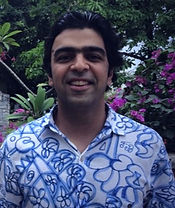
Fernando N. Santos is an assistant professor at the Korteweg-de Vries Institute for Mathematics at the University of Amsterdam. His research integrates theoretical physics, applied mathematics and data science, focusing on bridging results in computational topology, geometry and statistical mechanics with network neuroscience and artificial intelligence. Some of his recent work has focused on the interdependency of scaling relationships in the human brain.
Fernando N. Santos
(University of Amsterdam)
Frank Pijpers is a senior methodologist at Statistics Netherlands and professor by special appointment of "Complexity for Official Statistics" at the University of Amsterdam. He works at the intersection of complexity and official statistics, drawing on a background in physics, astronomy, and research across Europe and the UK. His research focusses on applied statistics, in particular on the application of the theories and analysis techniques of complexity science to causal relationships in social and economic phenomena in our society.

Frank Pijpers
(University of Amsterdam
& CBS)
Schedule and Registration
Practical information:
The workshop is a full-day event, taking place from 9:00 until 17:00.
The location of the workshop is the Amsterdam public library OBA Oosterdok, in the Forum zaal.
Registration:
Please register through this form.
Preliminary program:
9:00 – 9:25: Walk-in
9:25 - 9:30: Opening remarks
9:30 – 10:30: Geoffrey West
Coffee break 10:30 – 11:00
11:00 - 12:00: Marc Barthelemy
12:00 - 12:30: Frank Pijpers
Lunch break 12:30 - 14:00
14:00 - 15:00: Tiziana Di Matteo
Coffee break/Refreshments 15:00 - 15:30
15:30 - 16:30: Miguel Muñoz
16:30 - 17:00: Fernando A.N. Santos
Organisers

Jácome (Jay) Armas
(University of Amsterdam)

Tuan Minh Pham
(University of Amsterdam)
